Parametric ceramics, bio-based finishes and ultra-thin slabs are reshaping what a surface can be — and what it can do for a building.
If the last decade in surface design was about scale — bigger slabs, fewer joints, larger formats — the next decade will be about behaviour. Surfaces are becoming responsive, performative, and in some cases nearly alive. The building envelope, both inside and out, is being reimagined.
Parametric Ceramics
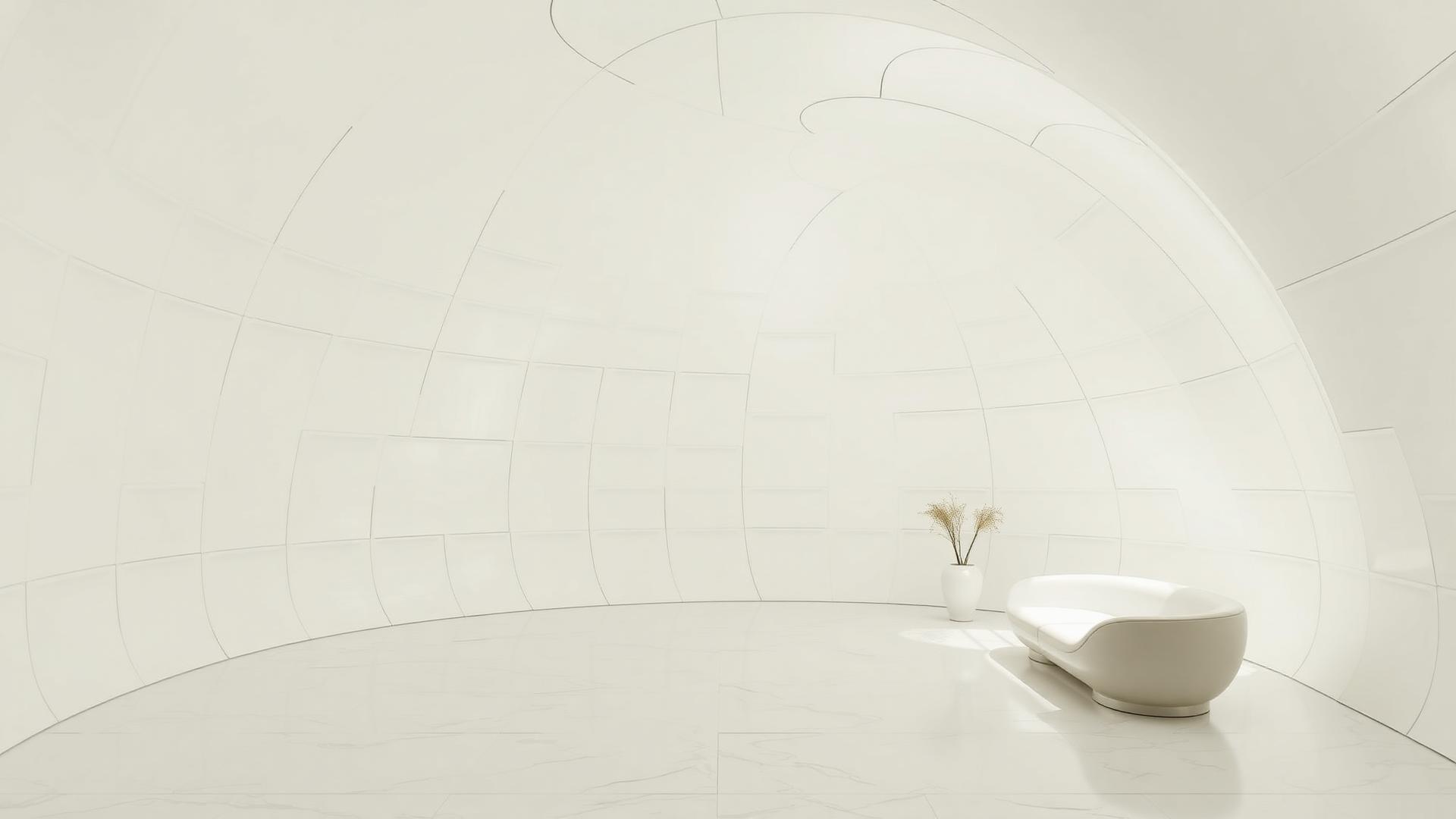
Robotic press technology now makes it economical to manufacture ceramic panels with continuously varying surface geometry. Walk past a recently completed cultural building and look closely: that gently undulating ceramic façade is not assembled from repeated tiles but from a sequence of unique panels, each pressed to a parametric design.
"We are entering an era where every panel can be different, and the cost of difference has finally collapsed."
Materials That Carry Their Story
- Recycled-content porcelains using up to 40% reclaimed material
- Bio-based lime plasters with measurable carbon sequestration
- Thin-slab ceramics half the weight of conventional tile, halving transport emissions
- Modular surface systems designed for disassembly and reuse
What Architects Are Specifying Now
The forward-looking specification today is rarely about the surface alone. It is about the surface as part of a system — its weight, its installation method, its end-of-life path, its embodied carbon. The aesthetic conversation has finally caught up with the environmental one.
FAQs
Continue reading on Surfaces or Architecture.