The contemporary luxury kitchen is restrained, monumental and material-forward — and the surfaces you choose matter more than the appliances.
The premium modern kitchen has shed almost everything that defined the kitchens of the previous decade. Gone are the open shelves stacked with curated ceramics, the contrasting island colours, the visible appliance brands that once telegraphed status. In their place: monumental volumes, full-height stone, a single dominant material gesture, and an almost ceremonial quietness.
Start With the Architecture, Not the Cabinetry
The first decision in any premium kitchen is volumetric. How does the room read as architecture? Is the island a pedestal or a counterweight? Does the run of cabinetry want to read as a continuous wall or as a piece of furniture? The cabinetry, hardware and material choices all flow from those answers — never the other way around.
"A great kitchen is a great room first and a kitchen second. The cooking should feel like a privilege of the architecture."
The Material Hierarchy That Works
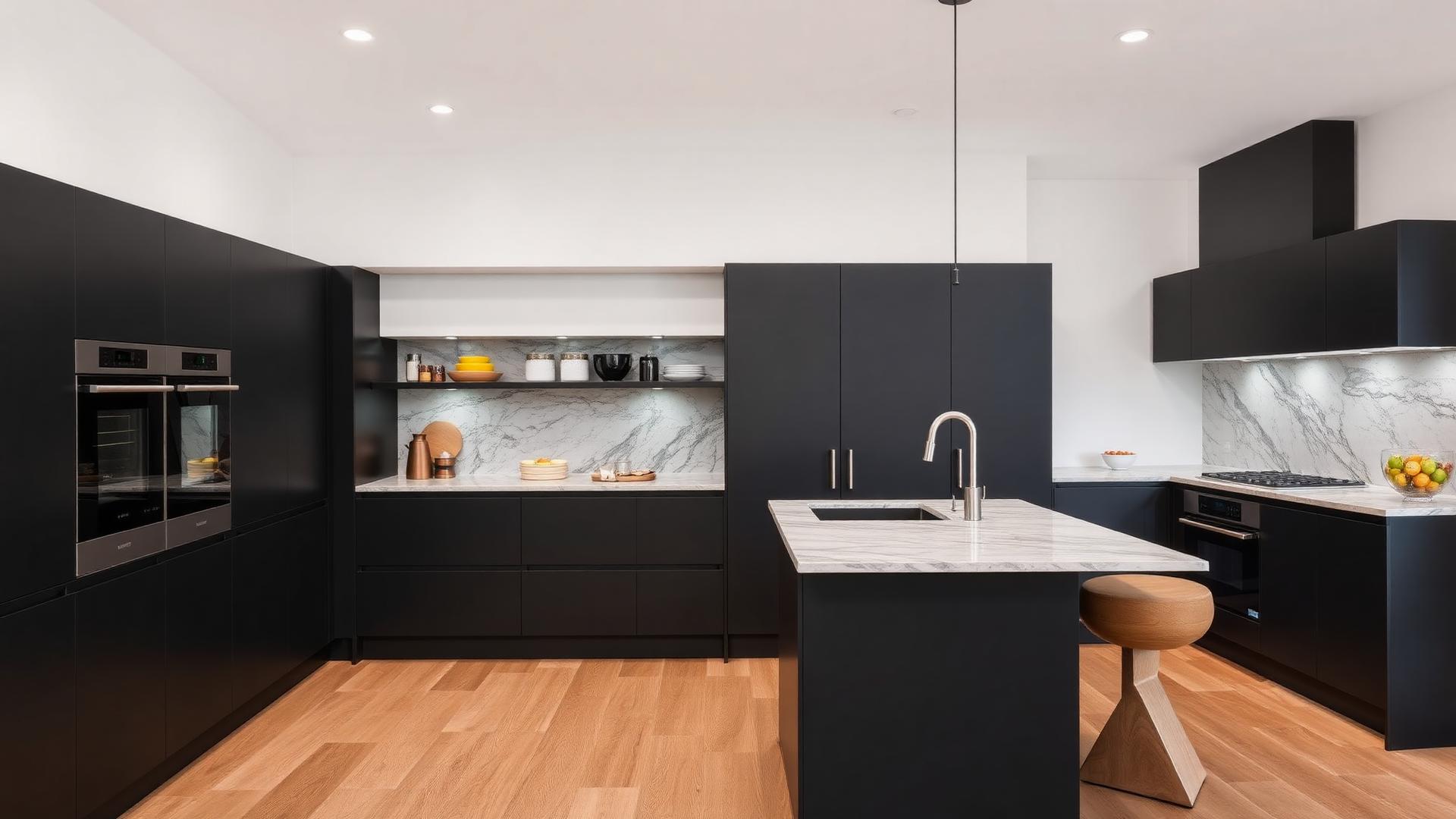
- One dominant stone or porcelain — used on the island, the splashback and ideally the floor
- One quiet cabinet finish — matte black, fumed oak, or hand-painted bone
- One warm metal — unlacquered brass, brushed bronze, blackened steel
- One sculptural light — a single statement pendant over the island
The Island Is the Room
Every premium kitchen now revolves around its island. Waterfall edges in bookmatched calacatta, monolithic blocks of honed limestone-look porcelain, or even sculpted curved islands in hand-glazed ceramic — the move is to treat the island as the most important piece of furniture in the home.
Restrain the Hardware
Touch-latch cabinets, push-to-open drawers, and integrated appliances let the architecture speak. When hardware does appear, it should feel intentional and few — long horizontal pulls in a single warm metal, repeated with discipline.
Done well, the result is a kitchen that disappears when not in use and commands attention when it is.
FAQs
Continue reading on Surfaces or Architecture.